
What you need to do to protect that attractive luster
Typically, homeowners belong to a small selection of categories. For instance, they either designed the kitchen with care, selecting everything from the countertops to the appliances or they bought the home and inherited a kitchen that looked so great they decided that no additional work was needed.
Without doubt, the kitchen is the focal point of any given home. There’s a reason millions of dollars are invested each year solely on kitchen improvement and remodels. So, when a commitment like that is made, you sorted through the options, and handpicked everything that appealed to you, you most certainly want to do everything you can to preserve the condition of your choices.
You’re already on the right track, you know it’s important to take care of your cabinetry. They experience wear and tear every single day, but that doesn’t mean they need to succumb to overuse any time soon. They’re designed to last and they will, you just need to do your part to help insure their preservation. By keeping your kitchen cabinets well maintained your entire kitchen’s appearance will benefit.
The Golden Rule: Clean Your Cabinets
It’s as obvious as can be, but there are homeowners who never wash their cabinets down and then get frustrated when the black shadows of grease start to grow on the surface. It may actually look kind of okay, but it’s completely gross. Especially after cooking, you should spray them down and go over the surfaces with a clean soft cloth. This will prevent the formation of serious stains.
Of course you don’t want to scratch the surface of your cabinets, so go easy. With a couple of drops of dishwashing liquid and warm water you will have a solution that should do the trick adequately. Avoid using brushed or even the slightest abrasive sponge, use soft cloths only.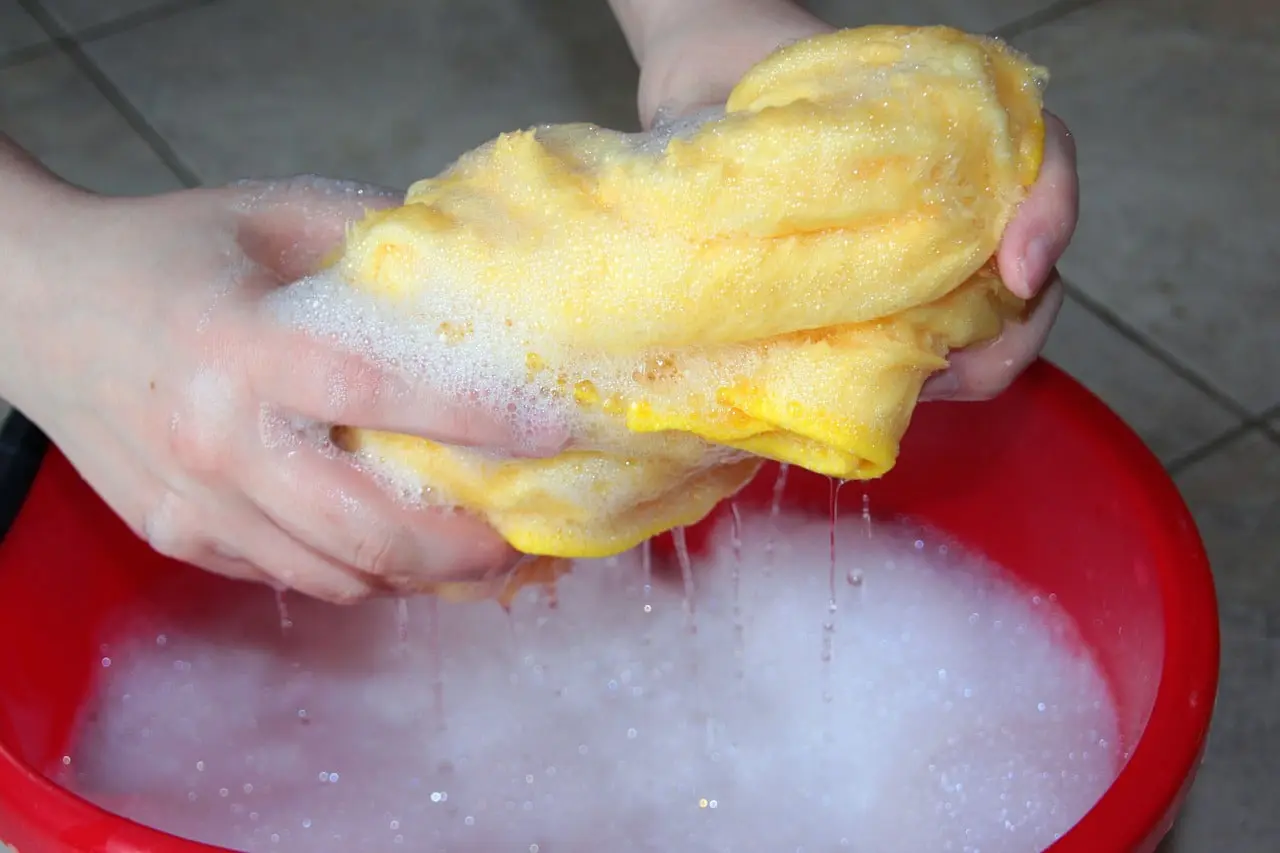
If you need a stronger solution, any all-purpose cleaner may be effective. But first test it on an area that is not readily visible. There’s always a possibility of an adverse reaction to the chemicals. If you’re good to go, proceed to clean and always finish with a wipe down using a water dampened cloth.
As you know there is a wide range of materials from which cabinets are made. You may have looked at samples of each before settling on whatever was your final choice. Well, to each type of cabinet material is a specific way to clean it. Here’s the basic list of those:
Wood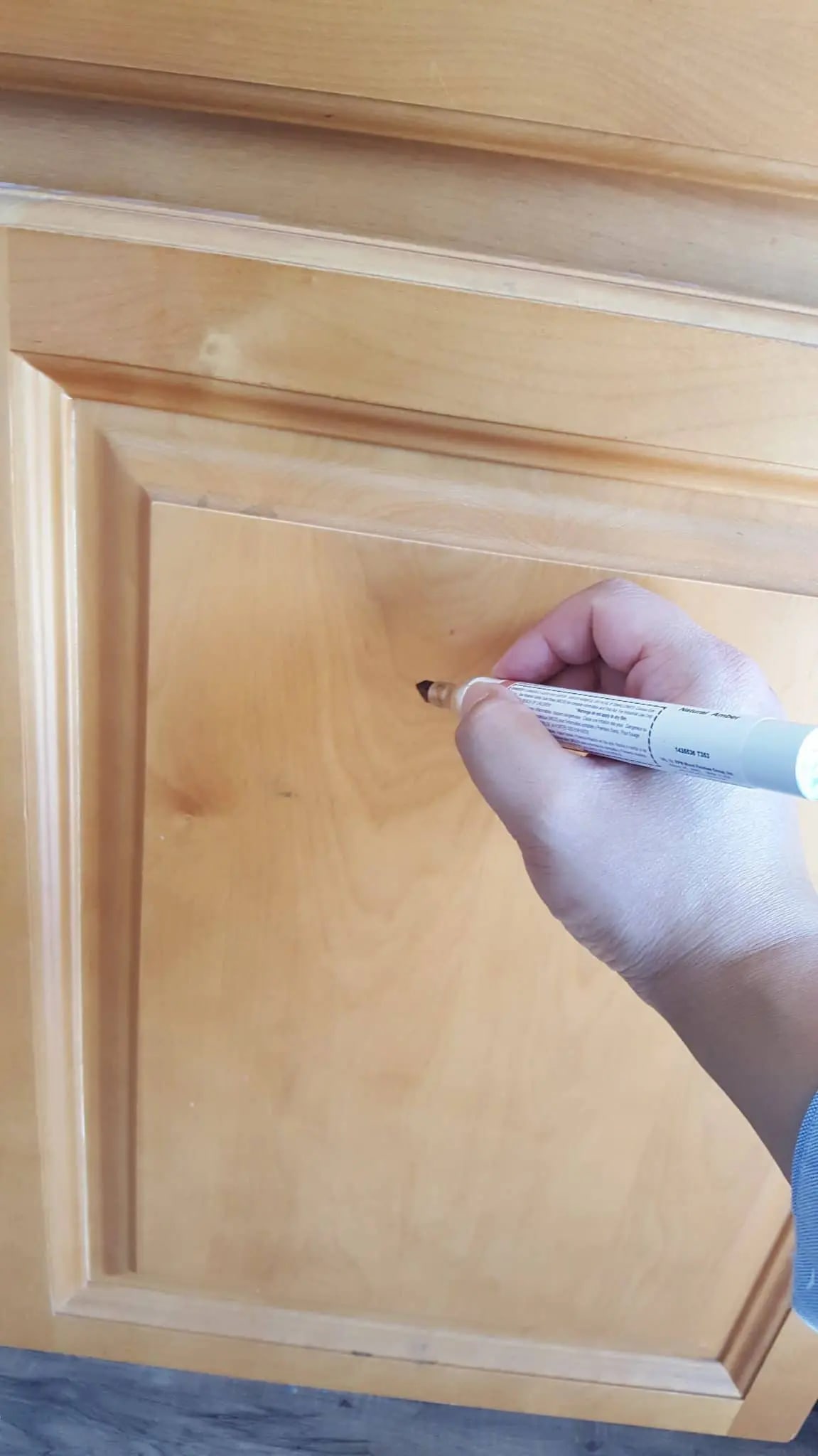
The first thing to know when you own fine wood products like kitchen cabinets is that you must avoid all oil based products or letting oils come into contact with the surfaces at all. There’s a good reason – when oil sits on wood, it attracts anything and everything by way of dirt and grime. This will eventually compromise the quality of your wood.
For minor repairs in case of small damages like scratches or indentations, you can fill in the affected area with a filler wax blend stick. For stains, blemishes, and chipped paint, there are touch-up paint markers that you can use to touch-up the area. Both these items usually come in a touch-up-kit that is available for purchase at most cabinet companies. They are available in different varieties all designed to blend in with the finish of the wide variety of wood cabinets out there.
Laminate
Repair kits like the wax fill ones are also available for laminate cabinets which are just as common as those made with wood. They are a necessity to have around in case of scratches. The material is very unique and you can’t use anything else. Now on the other hand, if you have a problem with staining, act quick to absorb the offending spot with a paste made of baking soda (it’s simple – add a little water to baking soda and apply it to the stain). Remove the paste as gently as you can, it is possible to scratch the laminated surface with this process, exercise care and there will be limited risk.
Thermofoil
Not to be left out, repair kits specific to thermofoil can be purchased and are also designed to treat blemishes in this sensitive material. Like laminate, thermofoil has been successfully developed over the years to be more durable than ever. As a result the materials can only be repaired so much. Severe damage likely cannot be prepared, and they will likely have to be replaced.
Glass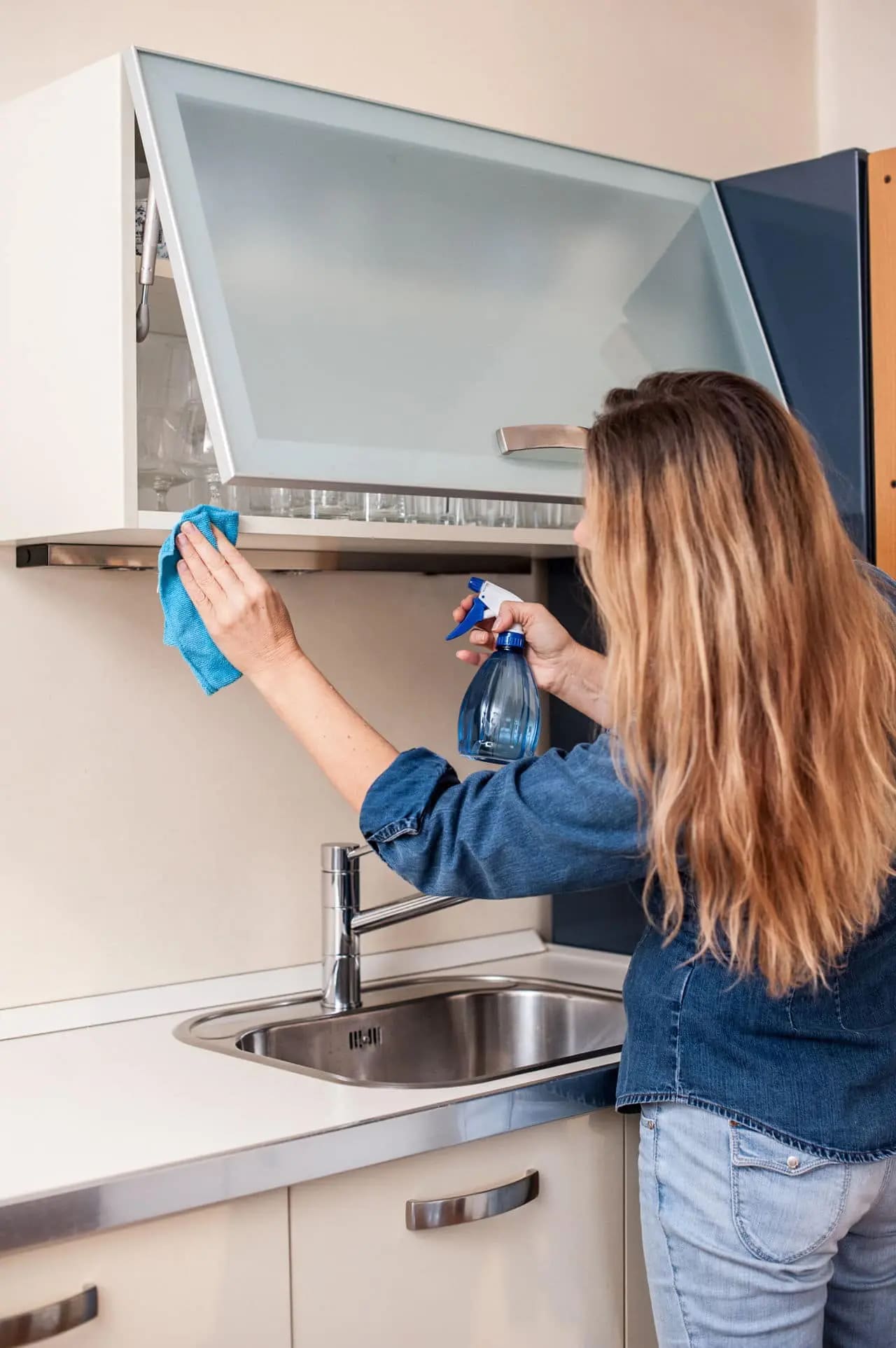
The good news about kitchen cabinets that use glass as the primary material for their doors is that you can use just about any store bought cleaner produced to treat glass surfaces. In a pinch you may even use items you already have at home by concocting an effective solution. For instance, one part water to one part white vinegar creates a glass cleaner that can clean without leaving streaks behind.
The Last Word
Before attempting to clean your cabinets know exactly what kind of material they’re made of and be certain to read the manufacturer’s instructions for the best proper care in order to avoid any unwanted deterioration. If you’re not certain, take a look at this guide to various kitchen cabinet styles.