An accessible kitchen is not just a trend—it’s a necessity. It ensures comfort, safety, and independence for all users.
Designing an accessible kitchen design enables all individuals of all ages and physical abilities to cook, clean, and enjoy their space without barriers.
This guide will inform you of everything you need to know when designing an accessible kitchen, whether you are building a new kitchen, planning a remodel for an elderly individual, accommodating a family member with a disability, or simply making informed choices.
What is an Accessible Kitchen
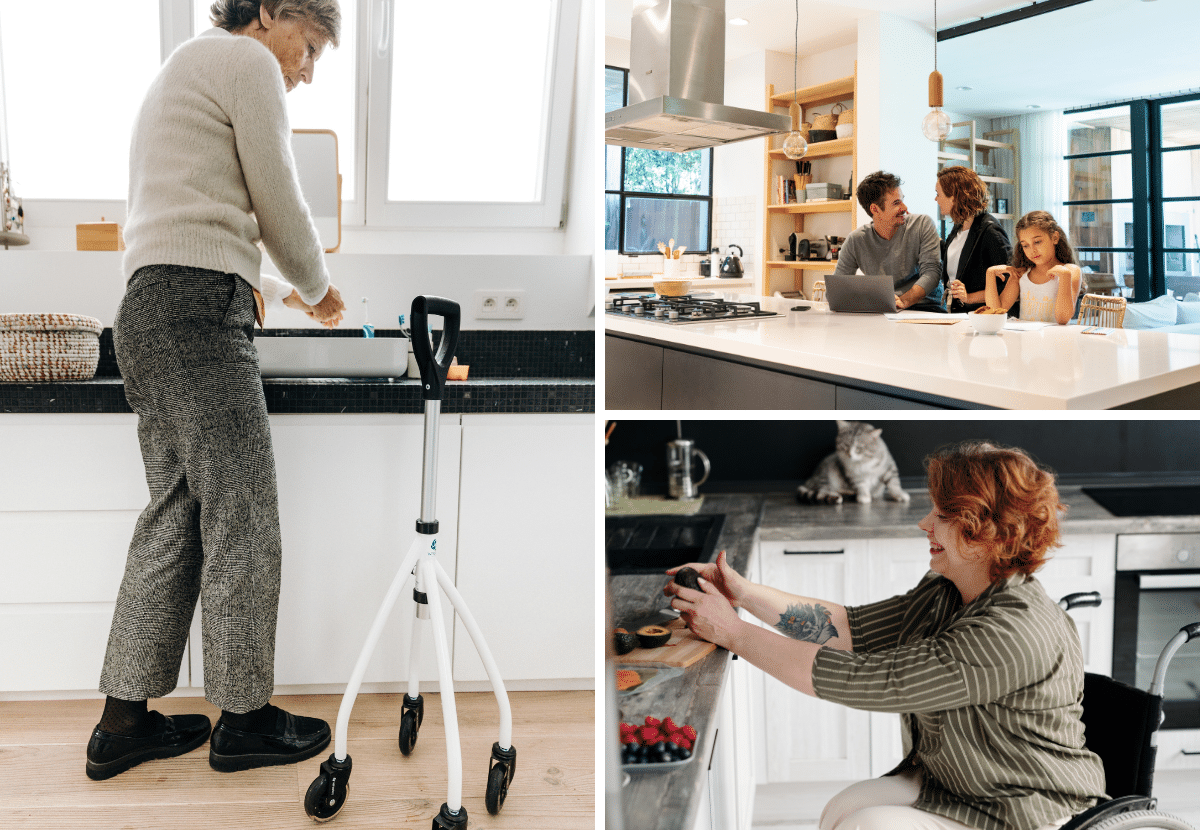
An accessible kitchen is a well-planned cooking space that ensures ease of use for people with a wide range of abilities and mobility levels, including individuals who use wheelchairs and walkers, and other mobility aids.
Yet, an accessible kitchen design goes beyond just wheelchair accessibility. An accessible kitchen plan also addresses individuals with vision impairments and strength limitations.
This involves ergonomic layouts, adaptive appliances, and inclusive features that remove barriers and promote ease of movement, reach, and usability.
An accessible kitchen design means:
- Smart kitchen layouts
- Barrier-free entryways
- Ergonomic cabinets
- Lowered countertops
- Adaptive appliances
- Easy-to-reach kitchen storage
- Adaptable lighting and controls
The goal is to create an environment that promotes ease of movement, reach, and usability.
Who Benefits from an Accessible Kitchen
An accessible kitchen is designed to be universal, making it a smart and inclusive choice for any home. While accessibility often brings to mind wheelchair users or seniors, the benefits of an accessible kitchen extend further than wheelchair accessibility.
Accessible kitchen design benefits a wide range of individuals, including:
- Individuals who use wheelchairs or mobility aids
- People with vision or hearing impairments
- Seniors experiencing reduced strength, balance, or reach
- Individuals with chronic conditions affecting movement and coordination
- Children who need safer, reachable spaces
- Caregivers who assist family members with kitchen-related tasks
- Families with multigenerational households
- Anyone recovering from surgery or injury
- Families seeking a safer, more user-friendly kitchen
Why Accessible Kitchen Design Matters
Designing an accessible kitchen is a smart choice. It promotes independence, safety, and inclusivity, making sure the kitchen is usable by everyone regardless of physical ability without the need for costly remodels.
Having an accessible kitchen is important because it:
- Promotes independence for people with disabilities or limited mobility
- Future-proofs your home for aging in place
- Increases the usability of the kitchen for all family members, including children
- Improves kitchen safety by reducing the risk of accidents, falls, and burns
- Creates a welcoming space for guests
- Add long-term value and resale appeal to your property
- Complies with legal standards such as the Americans with Disabilities Act (ADA)
8 Key Features of an Accessible Kitchen Design
Creating an accessible kitchen requires careful planning and preparation. Here are the core features that make a kitchen truly accessible:
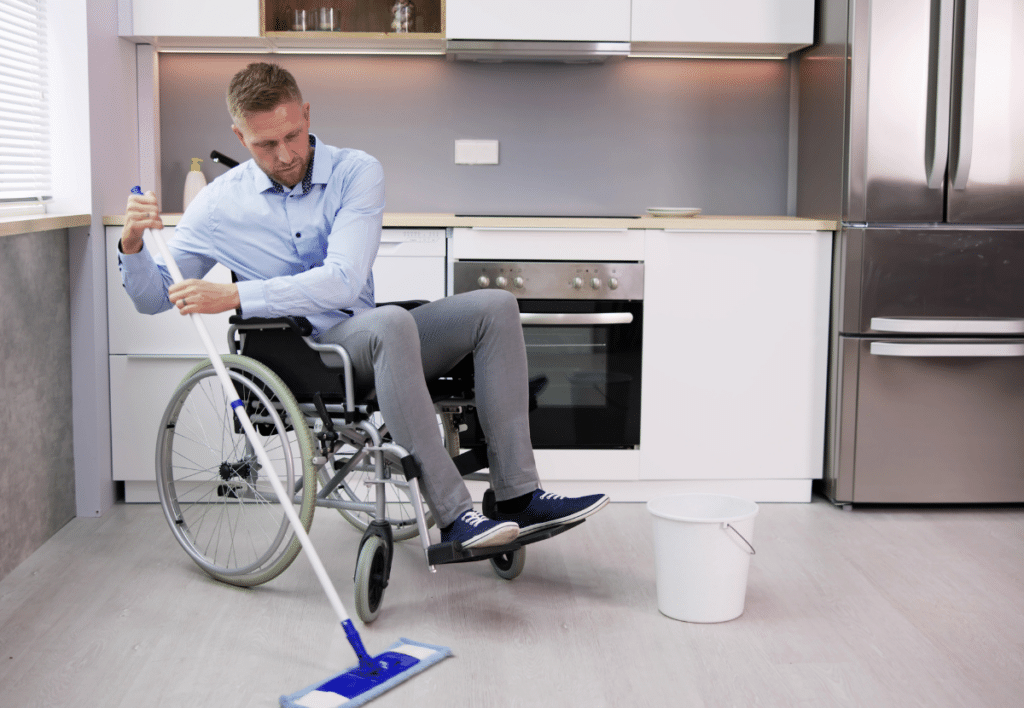
1. Wider Pathways and Clearances
- Minimum 42″–48″ wide aisles so wheelchair users can comfortably move
- At least a 5-foot turning radius for full wheelchair rotation
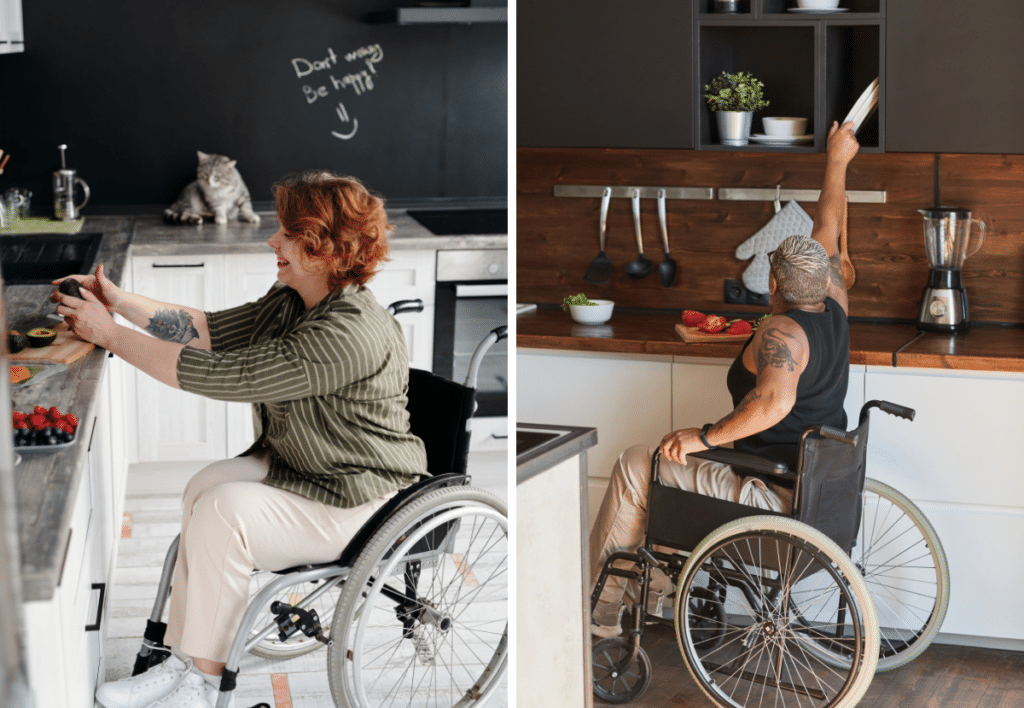
2. Lower Countertops and Work Surfaces
- Standard counters are approximately 36″ high
- Accessible counters are often 28″–34″ high
- Motorized adjustable countertops for flexibility
3. Open Space Below Sinks and Work Areas
- Knee space under sinks, cooktops, and prep areas (at least 27″ high)
- Insulated or enclosed pipes under the sink to avoid burns or injuries
4. Reachable Storage Solutions
- Lazy Susans, or corner cabinet carousels
- Pull-down shelves instead of high cabinets
- Drawer-style appliances for easier access
- Pull-out drawers and pantry shelves
- D-shaped handles for easier grip
- Soft-close cabinet doors and drawers
5. Appliance Placement
- Side-opening ovens and lower-mounted microwaves at reachable heights
- Counter-depth or side-by-side refrigerators for easier access
- Cooktops with front or side controls to prevent reaching over hot surfaces
- Drawer-style dishwashers
6. Easy-to-Use Hardware and Fixtures
- Lever-style handles or D-shaped pulls instead of knobs
- Touchless faucets or single-lever models
- Rocker light switches and smart home controls
7. Non-Slip, Low-Threshold Flooring
- Slip-resistant materials like textured tile, vinyl, or rubber flooring
- Smooth transitions (no lips or thresholds) between rooms
8. Good Lighting and Contrasting Colors
- Layered lighting: task, ambient, and accent
- Under-cabinet lighting to clearly illuminate workspaces
- Contrast between surfaces to aid those with visual impairments
Expert Tips on Designing an Accessible Kitchen
An accessible kitchen design does not mean sacrificing style. Here’s how you can design a kitchen that is accessible for everyone.
Understand Your Specific Needs
Evaluate the needs of current and potential future users. Think about mobility aids, reach limitations, visual impairments, or other physical considerations.
Follow ADA Kitchen Guidelines
The Americans with Disabilities Act (ADA) offers valuable standards for accessible kitchen design. Following the ADA requirements in your home adds functionality and value.
Work with a Designer or Contractor
Choose professionals with experience in universal design or aging-in-place remodels. They can suggest innovative solutions tailored to your space.
Always Prioritize Safety and Functionality
You don’t have to choose between functionality and style. Modern accessible kitchen designs blend beautifully into all types of décor.
Incorporate safety features such as fire safety tools, easy-to-use controls, and slip-resistant materials.
Choose the Right Materials and Finishes
When aiming for an accessible kitchen, choose easy-to-clean surfaces, a rounded countertop edge to reduce kitchen-related injuries, and high-contrast colors for visibility.
Final Thoughts
An accessible kitchen is more than just a design innovation—it is a practical step toward inclusivity, safety, and independence.
Whether you are building a kitchen from scratch, planning a major remodel, or simply making a small kitchen update, incorporating accessibility features ensures your space works for everyone today and in the future.
Contact Best Online Cabinets (BOC) To Design an Accessible Kitchen
At Best Online Cabinets, we ensure that our clients can create a visually appealing and functional kitchen.
Whether you are a homeowner or a contractor, we can help you design a kitchen that is comfortable, safe, and accessible for everyone in the home.
Contact one of our expert designers today to help you plan an accessible kitchen layout, choose the best cabinet design, and select storage accessories.
Schedule a free design consultation to get started.