Most homeowners think kitchen design starts with picking the best cabinet design or kitchen countertops. In reality, the kitchen design process steps start long before materials come into play.
As someone who has spent over 20 years in the kitchen and bath industry, seeing homeowners wrestle with layout frustrations, workflow bottlenecks, and the eternal battle between storage and style, I can tell you that a well-designed kitchen is not an accident—it is a sequence of thoughtful, strategic decisions that build on each other.
Below is a candid, expert-level look at how designers typically approach the kitchen design process, step by step, blending creativity with technical precision, whether it is a standard or a high-end kitchen.
Kitchen Design Process: Step-by-Step

Behind every seamless, intuitive, effortlessly stylish kitchen is a structured, methodical kitchen design process that most homeowners never see. Here’s a step-by-step walkthrough of how designers craft a kitchen that’s more than picking cabinet colors.
1. Lifestyle Mapping
No, you don’t start with choosing cabinets, materials, and finishes. Together with your designer, start by evaluating your lifestyle, including your functional needs and the people who will use the kitchen.
When you contact Best Online Cabinets for a FREE kitchen design, our expert designers will understand how you truly use your kitchen.
Before we proceed in measuring your wall (or asking for your measurements online) or sketch a layout, we start with you.
- Do you cook every night or mostly on weekends?
- Are you a “clean-as-you-go” cook or a “deal-with-the-mess-later” one?
- Does your kitchen serve as a social hub, homework space, or late-night gathering spot?
- Who will use your kitchen?
- Will there be mobility, safety, or accessibility needs?
This initial phase is more like a conversation than a design meeting. This stage is focused on understanding you, the homeowner.
A good designer listens for patterns: your routines, your irritations with your current space, your wish list, and even your quirks. And our designers do that.
2. Spatial Assessment
Now, if you have read our previous guides about kitchen design, you may already have an idea of what information you need to proceed with building your dream kitchen.
If you have already measured your kitchen and prepared some scaled drawings, it would be easier for us to proceed to the next step. But great designers go beyond basic room dimensions.
Your designers should consider:
- Natural walking paths
- Sightlines from adjoining rooms
- Window placement and light flow
- Structural limitations or hidden obstacles
- Existing plumbing, gas, and electrical points
This is also when we evaluate whether certain changes—like moving an island, enlarging a window, or shifting a doorway—are viable.
This step prevents costly surprises later and ensures that every cabinet, appliance, and detail fits beautifully in the real world—not just on paper.
3. Concept & Layout Development
This phase is where creativity meets logic. Once we understand your lifestyle and space, we begin sketching your layout, which is arguably the most consequential in the kitchen design process.
- Workflow patterns (prep, cook, serve, clean)
- Appliance placement for efficiency
- Whether to use the “classic triangle” or a zoned approach
- Island or peninsula suitability
- How the kitchen can support multiple users at once
Multiple layout sketches are often created and revised. This is where the kitchen’s personality begins to emerge.
4. Material & Finish Selection
This is the most exciting part of designing your kitchen, where you can add your unique personality to the design. This is the identity phase.
Once the layout is locked in, the kitchen needs its “skin”—the colors, textures, and finishes that define its mood.
Your personal preferences are important, but your designer should be able to guide you based on experience and practical considerations for the following design elements:
- Cabinetry materials and finishes
- Countertop surfaces
- Flooring
- Backsplashes
- Hardware and fixtures
- Lighting styles
- Appliance finishes
Here at Best Online Cabinets, we curate combinations that fit your home’s architecture and your lifestyle rather than simply following the current trends.
5. Technical Drawings & Specifications
This is the unglamorous but essential backbone of the entire project.
Here, designers create:
- Detailed cabinetry drawings
- Electrical and plumbing schematics
- Lighting layouts
- Ventilation requirements
- Installation guides
- Appliance specifications
This step ensures that every professional involved—builders, electricians, joiners, installers—works from the same precise blueprint. Every measurement, every hinge, every socket placement is decided here.
When this step is done well, installation becomes smooth and predictable.
6. Ordering, Scheduling & Cost Coordination
This step ensures everything you need arrives in the right order, at the right time, and in the right condition. Even a beautifully designed kitchen can fall apart without careful coordination.
Your designer should be able to coordinate the following:
- Ordering cabinetry, appliances, and materials
- Managing lead times
- Liaising with contractors and trades
- Scheduling each phase of the build
- Adjusting timelines when unexpected changes arise
- Ensuring all components arrive in the correct sequence
This step prevents the classic renovation horror story: a half-installed kitchen waiting three weeks for the correct countertop.
7. Site Preparation
Before the new kitchen can be installed, the old one has to be removed to prepare for the new one.
Preparation typically includes:
- Removal of existing cabinetry and appliances
- Wall repairs or structural modifications
- Updating plumbing, gas, and electrical systems
- Surface preparation for flooring, tiling, and painting
- Installing or relocating lighting infrastructure
Your designer can refer you to industry experts who can help you with the structural changes. Of course, if you have the skills, you can do this on your own. Yet, for your safety and sanity, better leave it to the experts.
8. Installation
This is the transformation you’ve been waiting for. This is the moment when everything comes together. Cabinets are fitted, worktops are installed, appliances are integrated, and finishing touches are applied.
This phase requires skilled tradespeople who understand the precision needed for:
- Seamless joinery
- Worktop alignment
- Integrated appliances
- Levelled cabinetry
- Perfectly aligned doors and drawers
Experienced installers play a crucial role here—precision matters, and so does craftsmanship. As each piece clicks into place, the design evolves from a plan on paper to a living, functional space.
9. Final Styling & Handover
And here comes the final step: making sure everything is installed according to specifications with no issues. Your designer will do a final walkthrough, such as:
- Testing appliances
- Confirming clearances
- Tweaking lighting
- Checking finish quality
- Adjusting doors and drawers
- Adding final styling elements if desired
Only when everything meets the original design intent is the kitchen considered complete.
Why These Kitchen Design Process Steps Matter
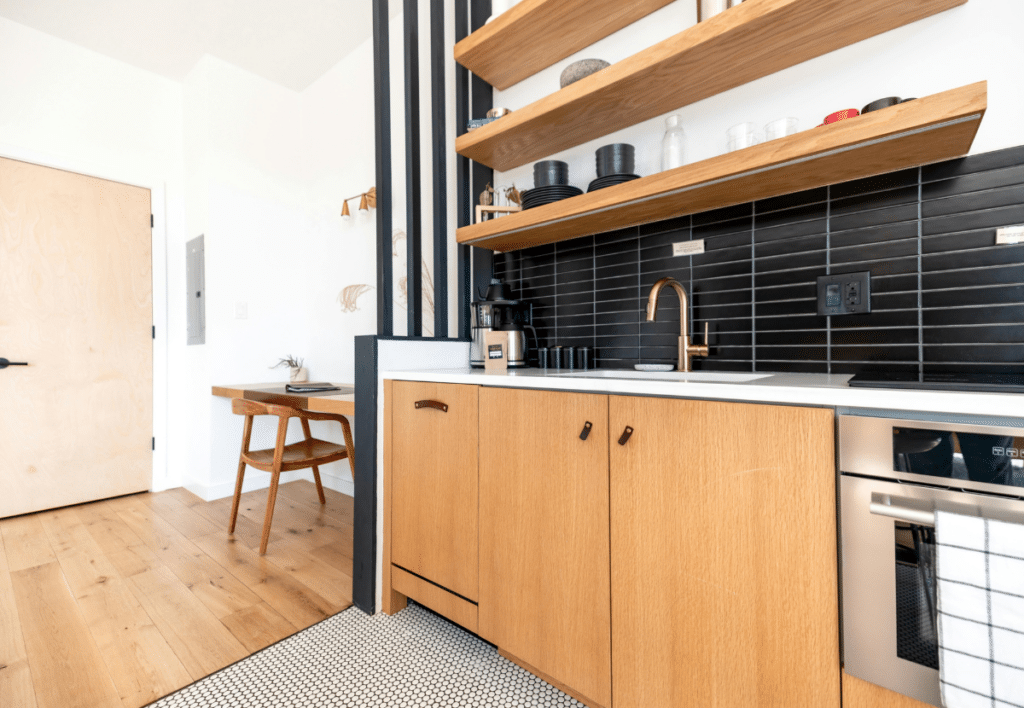
A beautiful kitchen isn’t created by accident. It’s the result of a carefully choreographed sequence of steps designed to anticipate problems before they occur and shape a space around how you live.
When done right, the process:
- Saves money
- Reduces stress
- Improves workflow
- Enhances resale value
- Extends the life of your kitchen
- Creates a space that feels yours unmistakably
A kitchen built through a thoughtful process isn’t just a room—it’s a daily experience.
Ready To Jump Into The Kitchen Design Process?
Never fret, we’re here to help! Contact us today to start your kitchen design journey.